The average brake repair cost typically ranges between $150 and $600 per axle, depending on whether you are only replacing pads or both pads and rotors. In 2026, labor rates and part quality play a big role in the final estimate for drivers in Waynesboro, VA.
What Is the Average Brake Repair Cost in 2026?
If you have noticed a squeal or a shudder every time you hit the brakes, the first question on your mind is the price tag. It is hard to give a single number without seeing the vehicle, but most drivers spend somewhere in the neighborhood of $200 to $500 for a standard brake repair involving new pads and rotor resurfacing. If the rotors are beyond repair and need to be replaced entirely, that cost can climb closer to $600 or $800 per axle.
Brake systems are the most critical safety component of your vehicle, so understanding the reason behind these costs is just as important as the numbers. The total bill is not a random figure. It is a combination of quality components built to handle extreme friction and heat, paired with the expertise of a technician who makes sure those parts are installed correctly.
When we talk about "per axle," we mean either the front two wheels or the back two wheels. Most cars put more pressure on the front brakes, so they usually wear out faster and need attention sooner. At True Tech Automotive, we keep it transparent, so you know exactly which parts are being replaced and why.
Factors That Influence Your Repair Bill
Several things determine where your specific brake repair cost lands. It is rarely a one size fits all situation, because every driver and every vehicle is different.
- Type of brake pads: Ceramic pads are pricier but quieter and cleaner than semi-metallic ones.
- Rotor condition: If rotors can be turned (resurfaced), you save money compared to buying new ones.
- Vehicle make and model: Luxury or heavy-duty trucks need more expensive, specialized parts.
- Labor rates: Local market rates in the Waynesboro and Augusta County area affect the service fee.
- Additional components: Problems with calipers or brake lines can add to the total.
How Much Does It Cost to Replace Brake Pads and Rotors?
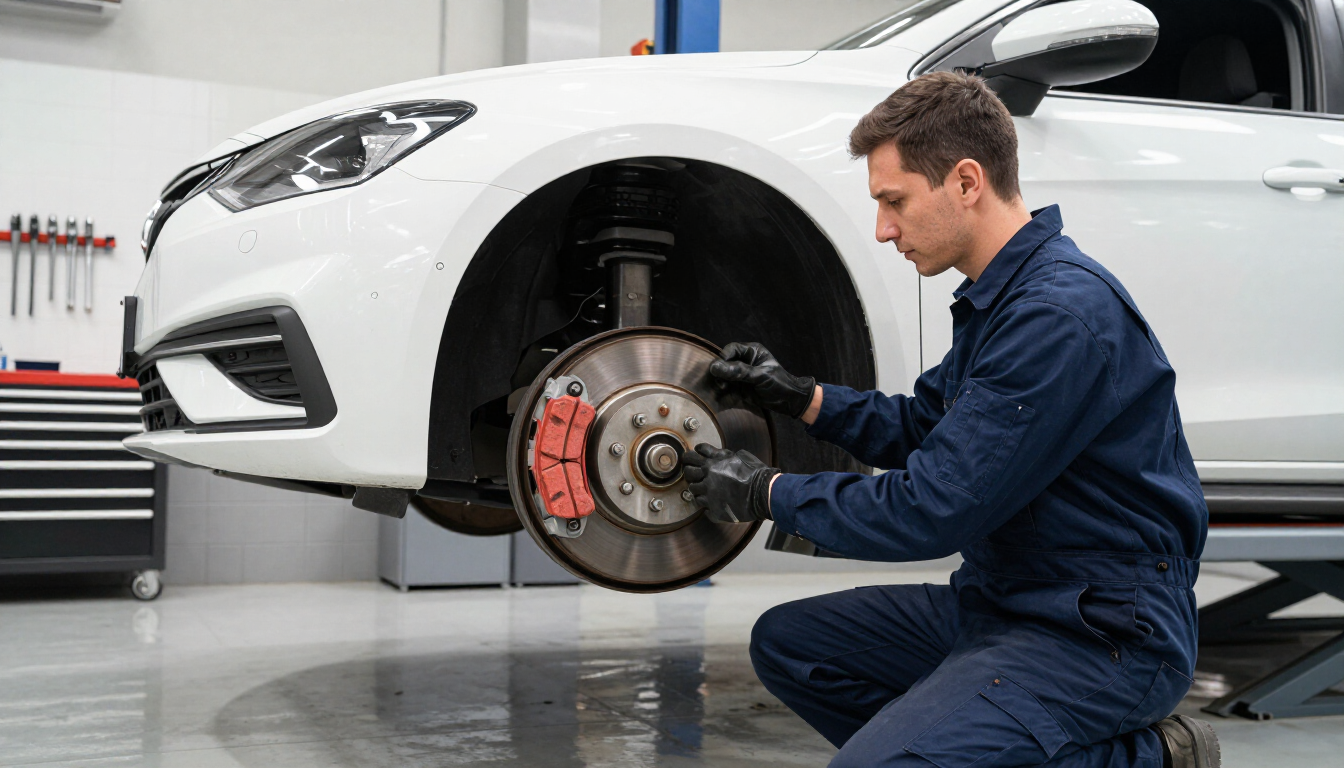
Replacing both the pads and the rotors is the most common comprehensive brake service. If you wait until you hear a grinding metal-on-metal sound, you have likely moved past a simple pad swap and into rotor replacement.
For a standard domestic sedan, you might look at $350 to $500 per axle for this combined service. For a heavy-duty GMC or Chevy truck used for towing, the components are beefier and more expensive, which can push that range to $600 to $900. Quality rotors matter because they act as the heat sink for the entire system. If they are too thin or warped, your stopping power drops and you might feel a dangerous pulsing in the pedal.
Why Do Labor Rates Affect the Total Cost?
Labor is a big portion of any auto repair bill. When you pay for labor, you are not just paying someone to turn a wrench. You are paying for the diagnostics and precision that make sure your car stops exactly when it needs to.
A typical brake job takes between one and three hours per axle. That covers lifting the vehicle, removing the wheels, inspecting the calipers, cleaning the mounting surfaces, installing the new hardware, and a test drive. Professional shops in Waynesboro hold high safety standards, which means calibrated tools and specific torque sequences that a DIY job often misses.
At True Tech Automotive, we do it right the first time. Our labor includes a thorough cleaning of the brake hubs to prevent lateral runout (vibration) and the right lubricants to stop that annoying brake squeal. A cheaper shop might skip these steps to save time, which often leads to the customer coming back a month later with noise complaints.
Understanding Different Brake Pad Materials
Not all brake pads are equal, and the type you choose will directly affect your brake repair cost. Most modern vehicles use one of three main types, each with its own price and performance profile.
- Organic pads: Often the cheapest option, made from fibers and resins. Soft and quiet, but they wear out quickly.
- Semi-metallic pads: Durable and great at shedding heat. Common on trucks and performance cars, but they can be noisy.
- Ceramic pads: The premium choice. Excellent stopping power, quiet, and very little dust, though they cost the most up front.
For most Honda, Toyota, or Mazda owners in our area, we often recommend ceramic or high-end semi-metallic pads. They give you the best balance of longevity and performance for the hilly terrain we drive in Virginia.
Does Vehicle Type Change the Price?
Absolutely. The engineering behind a compact Kia is very different from a heavy-duty fleet vehicle. Larger vehicles need larger braking surfaces and tougher materials to bring all that mass to a stop.
- Economy cars: Generally the lowest part costs thanks to high availability and simpler designs.
- Luxury imports: Often need specialized sensors and high-performance rotors that can double the part cost.
- Fleet vehicles: Heavy-duty vans and trucks used for fleet services need heavy-duty components that handle constant stop-and-go driving.
- European models: Sometimes require specific tools or computerized resets that can slightly raise labor time.
Signs You Need Immediate Brake Service
Ignoring brake problems does not just make the eventual brake repair cost higher. It puts you and your passengers at risk. Your car usually gives you several warnings before the system fails. Catching them early keeps the job to a simple pad replacement instead of a full overhaul.
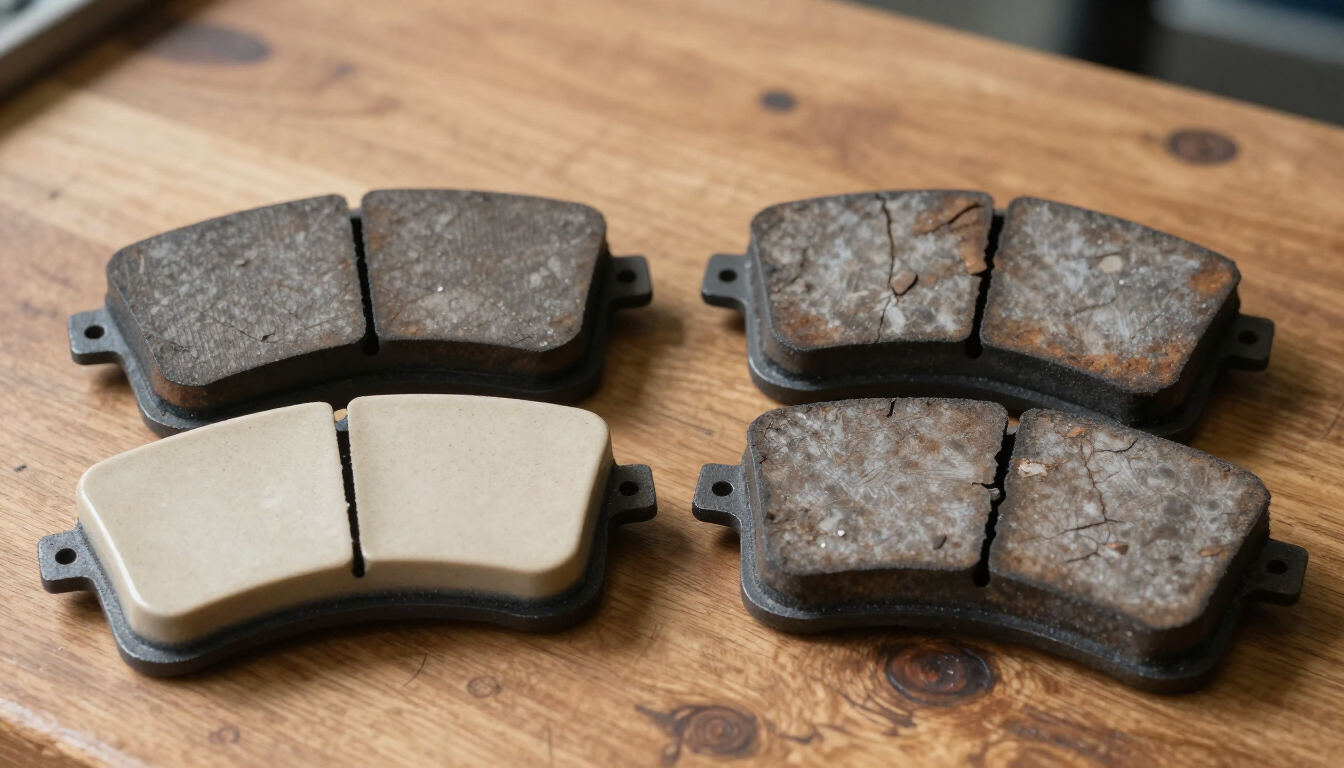
- Squealing or chirping: A small metal shim (the wear indicator) is rubbing the rotor to tell you the pads are thin.
- Grinding sounds: Your pads are gone and metal is on metal. Replace these immediately.
- Vibration or pulsing: This usually points to warped rotors or uneven pad deposits.
- Soft pedal: If the pedal feels mushy or sinks to the floor, you may have air in the lines or a master cylinder issue.
- Pulling to one side: This could be a stuck caliper or a collapsed brake hose.
If you notice any of these, schedule a diagnostic appointment right away. Catching a seized caliper early can save you from replacing an entire set of rotors before their time.
How Does the Waynesboro Climate Affect Brake Wear?
Living in the Augusta County area means your vehicle deals with specific challenges. Our winters bring road salt and brine, which are very corrosive to metal. Over time that salt can cause brake calipers to seize or rotors to build heavy rust on the cooling fins.
If you frequently drive through the Blue Ridge Mountains, your brakes work much harder than they would in a flat coastal city. Constant downhill braking creates a lot of heat, which can lead to brake fade or warped rotors. That is why we often suggest maintenance plans that include regular brake fluid flushes. Brake fluid is hygroscopic, meaning it absorbs moisture. In our humid Virginia summers, that moisture lowers the fluid boiling point and makes your brakes less effective on mountain descents.
Is a Professional Brake Inspection Worth the Cost?
Many drivers wonder if they should pay for an inspection when they are not sure there is a problem. We see it as an investment in your safety and your wallet. Our team does not guess. We provide photos and video of your vehicle's specific issues so you can see exactly what we see.
- We measure pad thickness in millimeters to give you an accurate life expectancy.
- We check for even wear patterns that can reveal alignment or suspension issues.
- We inspect the brake lines and hoses for cracks or leaks.
- We test the moisture content of your brake fluid.
Knowing the state of your brakes lets you budget for a future brake repair cost instead of getting hit with a surprise bill when something breaks. Transparency is the cornerstone of our service, and we want you confident in your decisions.
Ways to Reduce Long-Term Brake Expenses
You cannot avoid brake maintenance forever, but a few habits keep your lifetime brake repair cost as low as possible. Most of it comes down to how you drive and how often you look under the hood.
- Coast to a stop: Avoid late, heavy braking and let engine braking do some of the work.
- Remove excess weight: Carrying heavy items in your trunk makes the brakes work harder.
- Flush the fluid: Regular fluid changes prevent expensive caliper and master cylinder failures.
- Do not wait for the grind: Replacing pads early saves the rotors from getting chewed up.
- Choose quality parts: Better pads last longer and perform better, which saves money over time.
By following these tips and sticking to a consistent maintenance plan, you can add thousands of miles to your braking system. It is always cheaper to maintain a car than to fix a broken one.
What Should You Do Next?
If you have noticed changes in how your car stops, get a professional opinion. Brake issues never fix themselves. They only get more expensive and more dangerous the longer they wait. Whether you need a simple oil change with a complimentary brake check or a full four-wheel overhaul, we are here to help.
Summary of Brake Repair Takeaways
- Typical costs: Expect $150 to $600 per axle for most common repairs.
- Components matter: The price depends on whether you need just pads or both pads and rotors.
- Safety first: Brakes are your vehicle's most vital safety feature. Never compromise on part quality.
- Local expertise: Shops in Waynesboro understand the wear from mountain driving and winter salt.
- Proactive maintenance: Regular inspections keep a $200 pad swap from turning into a $1,000 full-system repair.
Ready to make sure your vehicle is safe for the road? Kyle and the team at True Tech Automotive provide honest, high-quality service for drivers across Waynesboro, Fishersville, Crimora, and Lyndhurst, backed by our 12-month / 12,000-mile warranty.
Prefer to talk it through first? Call us at (540) 212-9807.