
Most modern vehicles need an oil change every 5,000 to 7,500 miles when using synthetic oil. Your specific oil change frequency depends on your vehicle's age, the type of oil used, and whether you drive under "severe" conditions like frequent short trips, heavy towing, or extreme temperature swings.
What Is the Recommended Oil Change Frequency?
For years, the 3,000-mile oil change was the golden rule. As engine technology and oil chemistry advanced, those intervals stretched a lot. Today, if you drive a newer Honda, Toyota, or Chevy, you might see recommendations in your owner's manual as high as 10,000 miles.
Those long intervals are technically possible under perfect conditions, but they do not always match the reality of driving in the Shenandoah Valley. At True Tech Automotive, we recommend a more balanced approach. For most drivers on quality full synthetic oil, a 5,000 to 7,500-mile interval is the sweet spot. It keeps the additives active and the oil from breaking down under heat and friction.
If you are still using conventional oil, which is becoming rarer in modern engines, stick closer to the 3,000 to 5,000-mile mark. Conventional oil breaks down much faster than synthetic, losing its ability to lubricate vital parts and keep the engine cool. You can learn more about our approach on our Oil Changes and Maintenance page.
Factors That Change Your Oil Needs
The recommended interval is usually based on "normal" driving conditions, and very few of us actually drive that way. Things that shorten your oil life include:
- Age of the vehicle: Older engines often have more internal wear, which lets more contaminants into the oil.
- Engine type: Turbocharged engines run much hotter and need more frequent changes to protect the turbo bearings.
- Oil quality: Not all synthetic oils are equal. Quality brands hold their viscosity longer.
- Fuel dilution: In some modern direct-injection engines, small amounts of fuel mix with the oil and thin it out.
- Previous maintenance: A car neglected in the past may need more frequent changes to clean out old sludge.
If you are not sure where your vehicle falls, our team can build a custom Maintenance Plan for your make and model. Proper car maintenance is the most cost-effective way to avoid big repair bills down the road.
Does Driving Style Affect How Often I Change My Oil?
Absolutely. Your driving habits are probably the single biggest factor in when the oil needs to be swapped out. Mechanics and manufacturers usually sort driving into two groups: normal and severe.
Many drivers are surprised that their daily commute actually counts as severe service. If your routine involves any of the following, change your oil more often:
- Short trips: Driving less than 5 to 10 miles does not let the engine reach full operating temperature.
- Stop-and-go traffic: Constant idling and accelerating puts a higher load on the engine.
- Extreme temperatures: Very hot summers or freezing winters in Waynesboro speed up oil breakdown.
- Towing or heavy loads: If you use your truck for work or tow a trailer, your engine works much harder.
- Dusty conditions: Gravel or dirt roads push more particulates into the system.
When an engine does not reach full temperature, which happens on short trips, condensation builds up inside the crankcase. That water mixes with the oil and can create a milky sludge that restricts flow. To prevent it, drivers who only take short trips around town should stick to a 5,000-mile or 6-month interval, no matter what the dashboard monitor says.
Synthetic Oil Change Intervals Explained
Synthetic oil is engineered to have a more consistent molecular structure than conventional oil. It handles extreme heat better and does not thin out as fast. Because of that stability, synthetic intervals run longer, usually 7,500 to 10,000 miles for most vehicles.
Even if the oil lasts 10,000 miles, the oil filter might not. The filter traps carbon, metal shavings, and dirt. Once it gets saturated, a bypass valve opens so the engine still gets oil, but that oil is no longer being cleaned. That is why we often recommend a safety interval of 5,000 to 6,000 miles even with synthetic, since it keeps the filter working and the oil clean.
At True Tech Automotive, we focus on quality diagnostics so every part of your engine stays healthy. If your car has been acting differently, it might be time for more than an oil change. See our Diagnostics and Electrical services for how we track engine health.
What Are the Signs My Car Needs an Oil Change?
Mileage is the most common metric, but your car will often tell you when it is time. Being proactive saves you from the check engine light or, worse, a seized motor. Watch and listen for these five common signs:
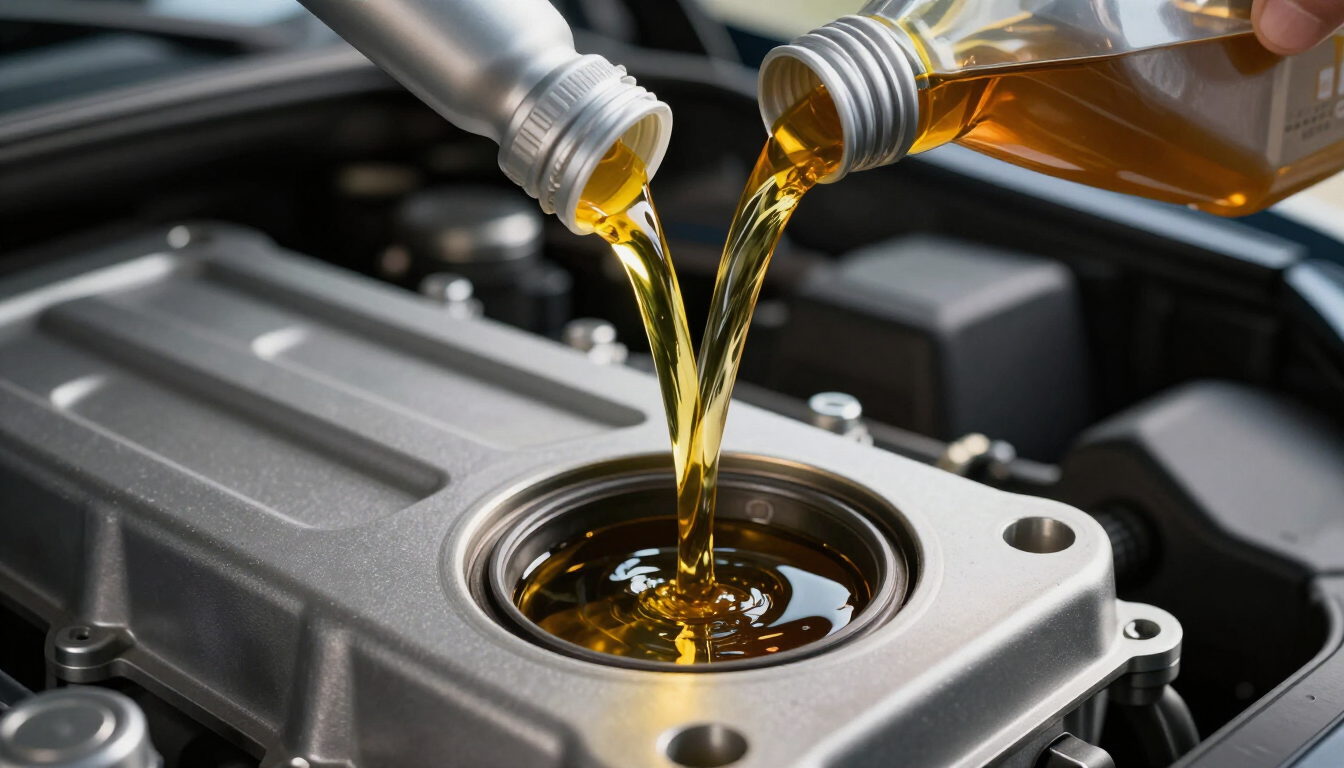
- Dark or gritty oil: Fresh oil is amber and translucent. If it is black, thick, or gritty, it is full of contaminants.
- Loud engine noise: Oil is a thin barrier between moving metal parts. When it thins out, you may hear knocking or ticking.
- Oil smell inside the cabin: This often means a leak or oil burning off from engine heat.
- Exhaust smoke: Vapor is normal, but blue or gray smoke often means oil is leaking into the combustion chamber.
- Persistent warning lights: If your oil pressure or maintenance-required light stays on, do not ignore it.
If you notice any of these, have a professional look right away. Waiting even a few hundred miles can cause permanent engine wear. Our team provides honest diagnostics, which means we tell you exactly what is wrong without selling you parts you do not need.
Why Your Oil Life Monitor Is Not Always Right
Most modern cars come with an Oil Life Monitoring (OLM) system. In most vehicles this is not an actual sensor that tests the oil. It is an algorithm. It tracks your mileage, engine temperatures, idling time, and RPMs to estimate how much life is left in your oil.
OLM systems are much better than a static sticker on the windshield, but they are not foolproof. They cannot account for a failing filter, a small coolant leak into the oil, or the specific quality of the oil used last time. Use the monitor as a guide, but do a physical check of your oil level and color at least once a month.
If your light came on unexpectedly, or the monitor seems off, book an appointment with us. We can reset the system and make sure your vehicle is truly ready for the road.
How Often Should Waynesboro Drivers Change Their Oil?
Driving in Waynesboro brings its own challenges. We have steep mountain inclines, changing humidity, and winter road salt. The Blue Ridge terrain means our engines work harder on climbs and run cooler on long descents, which can break oil down faster than flat-plains driving.
For local drivers who commute through the mountains or idle in traffic on West Main Street, we strongly suggest a 5,000-mile interval. That gives you a buffer against the varied terrain and the severe weather cycles we get in Augusta County. Regular maintenance keeps your Honda, Toyota, or Chevy reliable for years.
The True Tech Automotive Approach to Maintenance
We believe in transparency and education. When you bring your vehicle in for an oil change, we do not just swap the fluid and send you on your way. We do a comprehensive check to make sure your vehicle is safe. Our process includes:
- Digital inspections: We provide photos and video of any issues we find.
- Quality materials: We use high-grade filters and oils that meet or exceed OEM specs.
- Expert troubleshooting: If we see an issue, we find the root cause instead of treating the symptom.
- Clear communication: You get straightforward recommendations so you can make an informed decision.
Our goal is to be the shop you trust for the long haul. Learn more about us and our commitment to the Waynesboro community on our about page. We service a wide range of domestic and Asian imports, so no matter what you drive, it gets the care it deserves.
Summary of Oil Change Best Practices
- Stick to 5,000 miles for synthetic oil if you do a lot of city driving or mountain commuting.
- Check your oil level manually at least once a month to catch leaks early.
- Never skip the filter. A clean filter is just as important as clean oil.
- Listen to your car. Noises and smells are often the first signs of oil breakdown.
- Trust the team at True Tech Automotive for honest, transparent service in Waynesboro.
Ready to get your vehicle back in peak condition? Kyle and the team serve drivers across Waynesboro, Fishersville, Crimora, and Lyndhurst, and every service is backed by our 12-month / 12,000-mile warranty.
Prefer to call? Reach us at (540) 212-9807.